
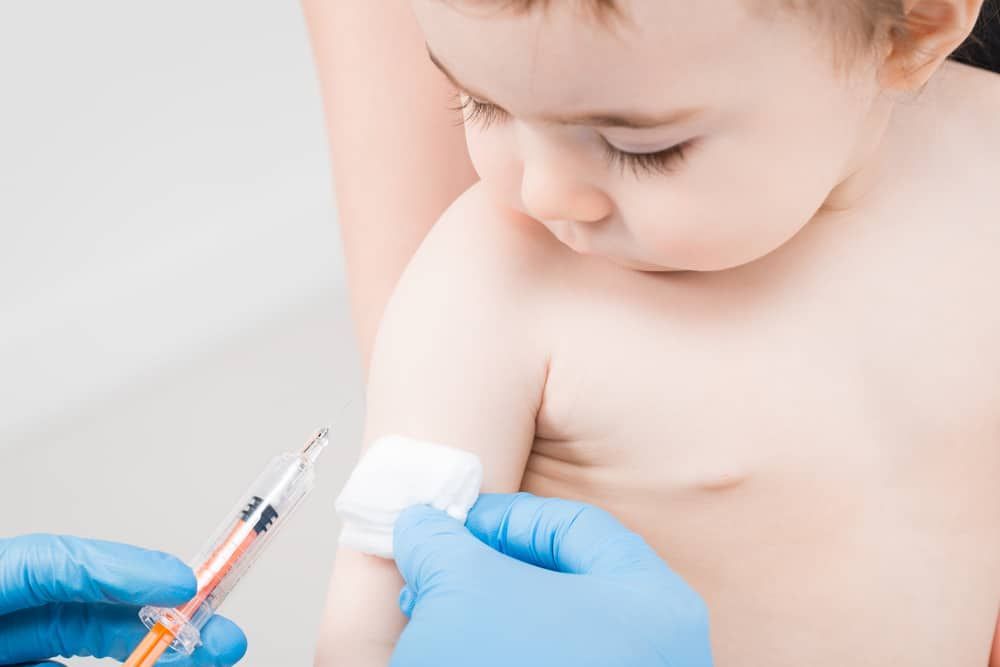

Immunization Schedule

Immunization Schedule

March 21, 2021

Verras Pediatrics

Age

Immunization

1 month

Hep B

2 months

DPT, Polio, HibCV, Prevnar, Rotavirus

4 months

DPT, Polio, HibCV, Prevnar, Rotavirus

6 months

DPT, HibCV, Prevnar, Rotavirus, Hep B

12 months

Varivax, MMR, Prevnar, Hep A

15 months

HibCV

18 months

DPT, Polio, Hep A

4-6 years

DPT, Polio, Varivax, MMR

11 years

Tdap, MCV, HPV

16-18 years

MCV, Meningitis B (Bexsero), Tdap


  1. DP&T – Diptheria, Pertussis (Whooping cough), and Tetanus. Most infants and children will have little if any reaction after these inoculations. However, some infants and children experience pain or discomfort beginning one to two hours after inoculation and lasting for 12 to 24 hours. This is perfectly normal and you need not worry if this happens. Infants can appear irritable or fussy and at times will run a mild fever. Acetaminophen can be given to these infants.
  2. Polio Series – these immunizations are quite successful in making your child immune to polio and generally do not cause any reactions.
  3. PPD test – the PPD test is not an immunization but a skin test to see if the child has been exposed to tuberculosis or if he or she might have a mild under-diagnosed case of tuberculosis. It causes no fever but must be checked in her office 48 to 72 hours after it is applied.
  4. Measles – Mumps – Rubella (MMR vaccine). This immunization protects against these three common endless is. There is no reaction immediately and many children never have a reaction to the shot. Occasionally however some children will develop a fever, joint pain, and a rash 5 to 12 days after immunization.
  5. Smallpox vaccination – the smallpox vaccination is not recommended and is not being given at the present time.
  6. HibCV (Haemophilus influenza, Type B conjugated vaccine) – recommended in infancy to prevent meningitis which is an infection to the brain.
  7. Hepatitis B vaccine – recommended for all newborns, infants, and children in adolescence to prevent hepatitis which is an infection to the liver.
  8. Varivax – designed to prevent or lessen the severity of Chickenpox. This vaccine is given after one year of age.
  9. Hepatitis A vaccine – two doses after one year of age.
  10. Rotavirus – recommended at 2, four, and six months of age.

Share this article

Recent Posts

A person in a blue shirt holds a sleeping newborn against their shoulder in a room decorated with wall cloud cutouts.
By Verras Pediatrics March 25, 2021
Congratulations on the birth of your baby! Having a baby is a special moment in our lives. Is there anything more precious or move more vulnerable than a newborn? This is also a time of worry, a time of parental insecurities. What if something goes wrong? But relax, love, and enjoy your baby. Before long … The post Newborn instructions appeared first on Verras Pediatrics.

A person with long dark hair smiles gently while cradling a newborn in a white shirt against their chest.
By Verras Pediatrics March 24, 2021
Comfort Babies are most comfortable if the room temperature is 70 to 74 degrees. Do not overdress your baby. Wash all new clothing and sheets before using. Clothing should be loose-fitting, lightweight, and soft textured. Babies born during this summer may be taken outside on a nice day after they are weak cold period babies … The post Baby Care appeared first on Verras Pediatrics.
A person in a white shirt holding a baby and feeding them with a bottle.
By Verras Pediatrics March 23, 2021
Babies, especially during the first few months of life, grow rapidly. Therefore, good nutrition is very important period feeding is one of your baby’s most pleasant experiences. At feeding time, the baby receives nourishment from food and a feeling of security. The choice of whether to breastfeed or bottle-feed is up to you. While not … The post Recommended Feeding Schedule for Infants appeared first on Verras Pediatrics.
An examination room with a blue exam table, medical diagnostic equipment wall-mounted above, and a gray waste bin nearby.
By Verras Pediatrics March 20, 2021
Well-baby checkups in the office begin at one week of age the next scheduled visits are at 1 month, 2 months, 4 months, 6 months, 9 months, 12 months, 15 months, 18 months, 24 months, and 30 months. After the third-year examination, we recommend annual physical examinations. We believe that each day in a child’s … The post Well visit check ups appeared first on Verras Pediatrics.